so for richard locke's fiction lecture we had to write a 5 page response to two of the authors we read over the semester. i did this. he liked it.
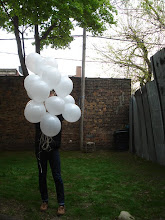
Grace Paley in a tree, Donald Barthelme beside her.
Grace Paley and Donald Barthelme sitting around in the backyard, having themselves a chat.
Grace Paley is sitting in a tree. This is not so odd, as they are in the backyard.
“The drinks” Don says.
“We did not want for drinks.”
“Did?”
“I have been known at times to confuse the present with the past, Donald, you know this about me for it is a fact and one certifiable by indeed even the City of New York itself.”
“The library” begins Don, and the whole world sighs. We say begins because the sentence is not finished. It is, in fact, not a thing that needs to be finished. There are you see moments wherein we begin a thing only to remind ourselves of it, because it in fact already exists, it is a fact, it has been certified by time and inscribed on our bones and only in the cold hard light of the reminding do we maybe even remember it.
Other times we go to Sweden. Other times we find some young thing to bury our sadness in for a time, until it too grows in them, and we are once more reminded of the certified fact we have carried along with us.
“Phooey” says Grace, in the tree.
They are in the living room now. Red bright leaves strew themselves about the carpet. It is a nice carpet. It is certainly not a shabby carpet. It has seen its share of spills and slips. It is the sort of carpet that likes it when you play old blues records. It prefers when you read aloud, preferably from Great Literature. It understands when certain words are capitalized.
It is a pretty great carpet we are talking about.
Grace says again “Phooey” as the children gather with their rakes to pile up the leaves.
“Now don’t jump in those piles,” Grace goes, “You never know what is hiding in them.”
And it is true, they do not.
Again in the living room. Drinking their drinks.
“Grace,” says Don, gesturing, “if you could ask the child to fetch me another drink,”
“What child?” Asks Grace. “No child of mine I will tell you that much. No sir, buddy.”
To this, Don can only scream.
Grace is on the roof, in a tree. Don entreats her to come down.
“Grace,” he says, “There is someone here to see you.”
I would not mind seeing someone thinks Grace so long as he had some sort of poise. Some sense deep down somewhere of the very realness of the world. And a fatherly figure of sorts for the boys. Ideally I think he might be the Lone Ranger. I think horseback would be best. For traveling. For so many things.
“Grace,” Don says, “He is Mexican. He has a mustache. He has known suffering, I can see it in his eyes. He seems gentle. He entreats you.”
“I entreat you,” entreats the Mexican, looking more and more like the Lone Ranger with each passing breath Grace holds within her, testing the waters of hope once more.
It has grown chilly in the winter. Grace has been briefly imprisoned. Wars are being waged and children set on fire. Don reads about this every day. What can he do? He is uncertain. He considers writing something of war. Each time he writes another sentence the previous sentence folds itself into a bird and flies away. That seems ridiculous he thinks, and he is, in all likelihood, not at all wrong.
“Grace,” he says, “We missed you so.”
“I should think you would, what with the cold weather, and the cold water, and the creaky pipes and the leaky faucets. You, Don, seem to be leaking from the eye. No matter. We are all sad, Don. We all suffer. If you need to take the time to do so you might as well do it. I myself have preferred never to speak openly of suffering. What I have done is known as is what has been done to me. The world is like a big radio, like a tin can phone, like a newspaper you can read, and it’s printed on our hearts. Don I don’t care.”
Grace tosses the other half of a tin can phone line to Don.
“For your heart,” she says.
They are not certain what to do, so they order in. Their children and spouses have taken to adjacent rooms and have also ordered in. The merits of ordering in have been discussed. Some insist upon family recipes. Upon pot roasts left to roast all day long, gently simmering in the juices of history and tradition. Others feel differently. Sure, it’s delicious. And who doesn’t like to eat it? But let’s face it, some days we don’t have time for that, so what, so we should go without? Without food? Some of us balk at such things. We wrangle our courage and hunger up like wild stallions and we use these wild stallions we have wrangled to trample everything in our path. We will not be stopped. We will be fed.
Donald Barthelme proposes a contest. They will take a younger lover. They will not tell their spouses. Their spouses will no longer be their spouses. In the night, when they cry out, their spouses will be there. The world will be a comforting place. Donald Barthelme proposes they get drunk. He proposes they maybe screw. He does no such thing. He says nothing in fact of the sort. They sit down and play a game of cards. They cannot decide between Go Fish or several other games involving cards. They play them all. At the same time. Grace Paley’s father dies of disappointment. Then he gets better. They all get better. Their game improves. The sun rises. The children are fed and bathed and sent off to school, where they learn all sorts of things, many of them good and sound and wondrous. They learn of hardship and defiance. They learn of terror. Of horror. Of pain. Of the wounding of brother by brother. Later, at night, in the dark, the children practice this. And then they cry. Then they too are held tightly by the parent, who calmly explains that this was just a dream, and that it may also have been real, and that there are many terrible things in the world, and that sometimes we cannot help these things, that we cannot assist them and we cannot resist them, that sometimes the world is a bitch and a god damned half. The child reminds the parent that it is but a child and should not hear such things and the parent of course apologizes. The parent, distraught, begins to wonder if they are doing a good job here. If they are just repeating and revisiting the horrors of their own parents. The child assures them that they are not. That this is different. That we make our own beds. The child does make its own bed. Every morning before school. The child was taught to tuck the sheets in under the mattress, and to fold the corner of the blanket at an angle approximating 45 degrees, to better invite one to pull back the sheets and to come on in.
Showing posts with label Vicarious MFA. Show all posts
Showing posts with label Vicarious MFA. Show all posts


THE RETURN OF THE VICARIOUS MFA
alright. so. hi. this is coming later than i meant it to, but whatever.
hello! and welcome, again, to the return of the vicarious mfa. [hopefully by keeping the same title, the posts will be easily accessible through the search bar conveniently located at the bottom of this blog.]
first week is down. so.
LECTURE:
Richard Howard
The Beginning of the End
Listen. Richard Howard is adorable. He is. Google Image search that shit.

Bam I did it for you. Motherfucker was dressed all in red. Red glasses, red and white striped shirt, giant red ring made of some sort of plastic [all of these also the same shade of deep red, or like a mix of alizarin and cad red medium fr anyone out there that has any idea what i'm talking about], [also the glasses were the same as that picture above, just red], red pants, red socks, and red suede slipon loafers that might could be called driving togs, those ones with the bumps on them. Anyway. This ain't a fashion blog. This here is about Literature and shit. So. I am going to probably just transcribe my notes. Maybe later I'll talk about the reading [Jekyll + Hyde] after it's discussed. ALSO IF THERE ARE ANY QUESTIONS OR THINGS YOU'D LIKE ME TO BRING UP PLEASE LEAVE A NOTE THANKS HEY HIGH FIVE. alright. NOTES:
[some of these will be quotes. a lot will be unattributed. if you would like to attribute them, feel free.]
[NOVELS ARE EPICS FOR A FALLEN AGE.]
[movies, apparently, are not actually [books]]
[Morel was French and when he studied he studied cretinism]
\
[Lombroso was Italian. Possible pinnacle of some such.]
[Degeneracy was all around]
\
[Degeneracy as a form of common sense]
/
[One strength of common sense is that it cannot be reduced to a unity of coherence. That it can allow for contradictions.]
\
[We have no intention here of coherence.
We are here to observe the ways in which things fall apart]
[Consolidation in the form of methodological rigor.]
[A faith in interpretation as a means of therapy
of trying to coax meaning from disparate troubles]
[The losses become inseparable from the paradigms that named them]
[Masculinism as [being] flawed with degenerism [with degenerative -isms]]
Alright. So a note on this format, that will probably not last past this post.
So I bought a bunch of notebooks and didn't notice that they were all blank and unlined.
And so I organize my notes in boxes and connect the related boxes.
I'll post pictures at some point.
And right so anyway the content.
All this was, the first class, was Howard talking about the class. About the time period. About what we were going to try and do, and discuss.
Tuesday we'll talk about J+H so the next post will be more in depth in terms of discussion.
The word [jingoism] kept showing up. By that I mean Howard would mention it, and chuckle. [Jingoism is defined in the Oxford English Dictionary as "extreme patriotism in the form of aggressive foreign policy".[1] In practice, it refers to the advocation of the use of threats or actual force against other countries in order to safe guard what they perceive as their country's national interests, and colloquially to excessive bias in judging one's own country as superior to others – an extreme type of nationalism.
The term originated in Britain, expressing a pugnacious attitude towards Russia in the 1870s. During the 19th century in the United States, journalists called this attitude spread-eagleism. "Jingoism" did not enter the U.S. vernacular until near the turn of the 20th century. This nationalistic belligerence was intensified by the sinking of the battleship USS Maine in Havana harbour that led to the Spanish-American War of 1898.] thank you wikipedia.
SEMINARS:
Timothy Donnelly
Poetry Seminar: Meter, Rhythm, and Form
[here on referred to as PROSODY]
Seriously I have like no notes about this class. I am kind of terrified of this class. My notes really read
[This is terrifying + I am terrified]
I am far less so now. Donnelly passed out a bunch of old English ballads about death and murder and madness. So I've decided that for this class, since we're going to be dealing with form, and writing a poem in a different form each week, that to make it fun for myself, that I am going to write all of them using the form of the murder ballad.
I will probably focus more on the American murder ballads, like Crow Jane, In The Pines, Goodnight Irene [suicide as a sort of murder], Deep Blue Sea [drowning as a sort of murder], and also traditionals like Mad Tom of Bedlam.
After this post and another Bourbon and Ginger I am going to diagram plot points and imagery in the various forms of these Ballads.
These will probably end up as poems in themselves, or maybe as a part of that whole digram hybrid essay thing that I think I'll try for. Hopefully if I have time I'll do two. One on murder ballads [the idea of bearing witness to them as a sort of essay on them] and one about various ways of drowning [probably just a multipart poem about drowning. whatever. being swallowed as a form of murder and burial.]
ALSO DISCUSSED
[poetry as a form of justifiable speculation]
\
[also called a LIE.]
[I want to say that it is possible there will not be very many notes for this class. Form and its study is weird for me, and what I may end up doing is just posting about the form we studied for the week, using my murder ballads as examples, and explaining it that way. Hopefully that's cool. If not, well, skip this section. Whatevs.]
Marjorie Welish
Avant-gardes, and Then Some: 20th-Century Experimental Poetry
This is a class that will have lots of notes.
So Welish is awesome. Really. She spent the entire two hours essentially summing up the Calinescu reading [transcribed below in notes that will likely be as abstract as the Howard ones. Don't worry I made real notes on the reading about Imagism, because I got excited.] and when I say summing up I mean for a little under an hour and a half she quoted and discussed the entire reading. This woman can pull quotes from her head, while making eye contact with you. She looks like an older bride of Frankenstein. Listen. I mean this in the most sincerely complimentary way possible. There is this intensity to her that is pretty incredible.
Alright.
Notes on the lecture, then notes on the reading about Imagism.
[Marjorie Welish is so fucking smart.]
[[the idea of placing]L=A=N=G=U=A=G=E in a narrative is hilarious.]
[the avant garde as the [forerunners of the new]]
[that which defies traditions + thwarts convention]
[JUNKS THE PAST] V [MAKES THINGS NEW]
POUND___________MARINETTI [fuck marinetti + fuck futurism btw]
[will not aban-______[burn the museums]
don Confucius]
\
[from all of this we get [where does the new come from?]]
[Sorry. I don't think that'll format how I want, and so fuck it, much like a lot of the avant garde, you gotta fucking work for that note.]
they were devoted to that impossible concept of futurity
\that the future is something that the present must address
\that the present must legislate the future
[[the avant garde] as an extreme contract with that which will be.]
also there is nothing reasonable and there is nothing subtle about that which clings to a strict dogma
[THAT HIPPIE SHELLEY]- advocates through the [i missed the word] of imagination rather than through reason. That we should be working towards the possibility of the infinite or the transcendent [how are these things the same? how are the different?]
[olinde rodriguez] ghost writing jew
[robert owen] fucking commie
[the avant garde is just a heard of independent minds]
[Baudelaire]
[it is less purely academic [according to Calinescu's work, which places the notion of the avant garde firmly in a cultural context, insisting, in a way suggesting a man who has found all other avenues of analysis exhausted, that the avant garde, being itself a reactionary dogma, must and can only truly be understood in terms of that which is is reacting against] as it is a cultural context]
and then came Rimbaud.
and the came Mallarme.
So before the Imagism reading I'm going to talk about Baudelaire and Mallarme and Rimbaud, who vehemently objected to the notion of the avant garde, which at the time, sought to unite art and politics. To use the arts as a tool and medium of revolution.
These writers found the notion offensive.
I am using this word because I cannot physically display on the internet the way I feel about it, the ways in which I agree with them, and how offensive to me personally the notion of using art in that way, for this notion of hamfisted social change by a rabid mass of indignation, but whatever. Let's be fair. Shit has its uses.
alright ok, notes on imagism!!!
[the avant garde is a reactionary movement]
\
[this is their definitive characteristic]
\
[it is interesting to note, or consider, the ways in which the avant garde is terrified of change, of no longer being avant garde, and so will attempt to vilify the new [see Pound's frequent declarations that all others were simply watered-down Pound's], and how this is retarded. How this is retarded both in the colloquial sense of it being fucking stupid, but also in the fact that it is the act of slowing down progress by dragging it down and through the mud.]
\
[once again noting that the avant garde is as subtle as a brick through with FUCK YOU painted on it. [or, alternately, I DO NOT LIKE YOU NOT DO I APPROVE OF WHAT YOU ARE DOING OR ANYTHING ABOUT YOU WHICH I FIND TO BE CONTRARY TO EVERYTHING THAT IS GOOD ABOUT LIFE AND LIVING AND I WILL DO TO YOU WHAT MY BRICK DID TO YOUR WINDOW AND I WILL SWEEP YOU UP AND PUT YOU IN THE TRASH WHERE THE YEARS OF HISTORY WILL BURY YOU UNKNOWN]]
[Tenets of Imagism as agreed upon by said school when first made new]
[1] Direct treatment of 'the thing', whether subjective or objective.
[2] To use absolutely no word that does not contribute to the presentation
[3] As regarding rhythm: to compose in the sequence of the musical phrase, not in [the] sequence of a metronome.
and, because it's always easier to say what we are not,
[] Use no superfluous words, no adjective which does not reveal something
[] Don't use abstractions such as 'dim lands of peace.' It dulls the image. It mixes abstraction with the concrete. It comes from the writer's not realizing that the natural object is always the adequate symbol.
[] Go in fear of abstraction. Do not retell in mediocre verse what has already [i wrote always and crossed it out] been done in good prose. Don't think any intelligent person is going to be deceived when you try to shirk all the difficulties of the unspeakably difficult art of good prose by chopping you composition [again here i put conversation] into line lengths.[..]
[]Don't imagine that the art of poetry is any simpler than the art of music[, or that you can please the expert before you have spent at least as much effort on the art of verse as the average piano teacher spends on the art of music].[..]
[for that one, I inserted the brackets. I found the first part to have meaning to me, and the second one to have less meaning. I understand what they are saying. That this shit is hard fucking work and is about putting in the fucking hours. That you need to do it until it becomes the mode in which you think and in which you process. That it is a thing that you cannot shake. Like how you drift off practicing fingerings without conscious effort. This makes perfect sense. I just don't like the way it's phrased.]
as all this was beginning, they were exposed to the first British exhibitions of cubism + of futurism + in this certainly was a thing that meant a thing.
[began in Britain with Pound, spread to America, more on that soon, pinky swear.]
["Schools + coteries were very much in the air"]
[One published in public, Pound + his poets disagreed.]
\
[Pound split, crankily, to found Vorticism [which I won't go into because whatever I don't care]]
\
[Amy Lowell took over. Shifted to U.S.A.
in 1917 she said 'the collection has done it's work']
Alright how fucking bad ass is that.
Seriously.
How many fucking people have the balls to say 'we made it new, and now there are other people making it newer, and we did out jobs, and we are going to cede the title of [the new] to these people, who are making new what we made new in ways we could never imagine' and so they retired
and they [this is of course me being idealistic but whatever] got down to the real work of [learning to live] with what [they] had done.
Then there were a bunch of notes on how to be hard in poetry.
Gene Morgan, if you are reading this, email me and I will send you the official list on how to be hard in poetry.
WORKSHOP
The Sarah Manguso
I don't really know what to type about workshop.
It was good.
The class, for me, was really helpful and responsive, The Manguso steared The Discussion when necessary, primarily focusing on the idea of whether or not the class felt i had earned the use of the word 'forever' at the end of the last short adventure. [After nearly ten minutes, no consensus was reached.] [This was brought up because The Manguso stated that there were words that she generally outlawed in her undergraduate workshops, primary among them: [always], [forever]] [obviously this means i am going to write a poem for workshop titled always forever, because I am a dickbag, which is a bag filled with dicks.]
Things said in class that were worth writing down:
[What to say when we have nothing to say to each other]
[Not all movement is progress]
[What could be more performative than grace?]
[this last one the only one not uttered by The Manguso, but muttered by a Welshman during the discussion of the final couplet of a poem in which a man says the Lord's Forgiveness for his bounty, and the Welshman interpreted this as the man taking the forgiveness as his bounty, as opposed to asking for forgiveness for the killing and cleaning of the doe. Which is what the poem was about. The killing and cleaning of a doe. And listen, although I don't think it was the meaning of the poem at all, it is a way more interesting read, and also it gave us that awesome line above, and so whatever.]
That's it.
Ladies and fucking Gentlemen, I give you the first official week of THE RETURN OF THE VICARIOUS MFA
hello! and welcome, again, to the return of the vicarious mfa. [hopefully by keeping the same title, the posts will be easily accessible through the search bar conveniently located at the bottom of this blog.]
first week is down. so.
LECTURE:
Richard Howard
The Beginning of the End
Listen. Richard Howard is adorable. He is. Google Image search that shit.
Bam I did it for you. Motherfucker was dressed all in red. Red glasses, red and white striped shirt, giant red ring made of some sort of plastic [all of these also the same shade of deep red, or like a mix of alizarin and cad red medium fr anyone out there that has any idea what i'm talking about], [also the glasses were the same as that picture above, just red], red pants, red socks, and red suede slipon loafers that might could be called driving togs, those ones with the bumps on them. Anyway. This ain't a fashion blog. This here is about Literature and shit. So. I am going to probably just transcribe my notes. Maybe later I'll talk about the reading [Jekyll + Hyde] after it's discussed. ALSO IF THERE ARE ANY QUESTIONS OR THINGS YOU'D LIKE ME TO BRING UP PLEASE LEAVE A NOTE THANKS HEY HIGH FIVE. alright. NOTES:
[some of these will be quotes. a lot will be unattributed. if you would like to attribute them, feel free.]
[NOVELS ARE EPICS FOR A FALLEN AGE.]
[movies, apparently, are not actually [books]]
[Morel was French and when he studied he studied cretinism]
\
[Lombroso was Italian. Possible pinnacle of some such.]
[Degeneracy was all around]
\
[Degeneracy as a form of common sense]
/
[One strength of common sense is that it cannot be reduced to a unity of coherence. That it can allow for contradictions.]
\
[We have no intention here of coherence.
We are here to observe the ways in which things fall apart]
[Consolidation in the form of methodological rigor.]
[A faith in interpretation as a means of therapy
of trying to coax meaning from disparate troubles]
[The losses become inseparable from the paradigms that named them]
[Masculinism as [being] flawed with degenerism [with degenerative -isms]]
Alright. So a note on this format, that will probably not last past this post.
So I bought a bunch of notebooks and didn't notice that they were all blank and unlined.
And so I organize my notes in boxes and connect the related boxes.
I'll post pictures at some point.
And right so anyway the content.
All this was, the first class, was Howard talking about the class. About the time period. About what we were going to try and do, and discuss.
Tuesday we'll talk about J+H so the next post will be more in depth in terms of discussion.
The word [jingoism] kept showing up. By that I mean Howard would mention it, and chuckle. [Jingoism is defined in the Oxford English Dictionary as "extreme patriotism in the form of aggressive foreign policy".[1] In practice, it refers to the advocation of the use of threats or actual force against other countries in order to safe guard what they perceive as their country's national interests, and colloquially to excessive bias in judging one's own country as superior to others – an extreme type of nationalism.
The term originated in Britain, expressing a pugnacious attitude towards Russia in the 1870s. During the 19th century in the United States, journalists called this attitude spread-eagleism. "Jingoism" did not enter the U.S. vernacular until near the turn of the 20th century. This nationalistic belligerence was intensified by the sinking of the battleship USS Maine in Havana harbour that led to the Spanish-American War of 1898.] thank you wikipedia.
SEMINARS:
Timothy Donnelly
Poetry Seminar: Meter, Rhythm, and Form
[here on referred to as PROSODY]
Seriously I have like no notes about this class. I am kind of terrified of this class. My notes really read
[This is terrifying + I am terrified]
I am far less so now. Donnelly passed out a bunch of old English ballads about death and murder and madness. So I've decided that for this class, since we're going to be dealing with form, and writing a poem in a different form each week, that to make it fun for myself, that I am going to write all of them using the form of the murder ballad.
I will probably focus more on the American murder ballads, like Crow Jane, In The Pines, Goodnight Irene [suicide as a sort of murder], Deep Blue Sea [drowning as a sort of murder], and also traditionals like Mad Tom of Bedlam.
After this post and another Bourbon and Ginger I am going to diagram plot points and imagery in the various forms of these Ballads.
These will probably end up as poems in themselves, or maybe as a part of that whole digram hybrid essay thing that I think I'll try for. Hopefully if I have time I'll do two. One on murder ballads [the idea of bearing witness to them as a sort of essay on them] and one about various ways of drowning [probably just a multipart poem about drowning. whatever. being swallowed as a form of murder and burial.]
ALSO DISCUSSED
[poetry as a form of justifiable speculation]
\
[also called a LIE.]
[I want to say that it is possible there will not be very many notes for this class. Form and its study is weird for me, and what I may end up doing is just posting about the form we studied for the week, using my murder ballads as examples, and explaining it that way. Hopefully that's cool. If not, well, skip this section. Whatevs.]
Marjorie Welish
Avant-gardes, and Then Some: 20th-Century Experimental Poetry
This is a class that will have lots of notes.
So Welish is awesome. Really. She spent the entire two hours essentially summing up the Calinescu reading [transcribed below in notes that will likely be as abstract as the Howard ones. Don't worry I made real notes on the reading about Imagism, because I got excited.] and when I say summing up I mean for a little under an hour and a half she quoted and discussed the entire reading. This woman can pull quotes from her head, while making eye contact with you. She looks like an older bride of Frankenstein. Listen. I mean this in the most sincerely complimentary way possible. There is this intensity to her that is pretty incredible.
Alright.
Notes on the lecture, then notes on the reading about Imagism.
[Marjorie Welish is so fucking smart.]
[[the idea of placing]L=A=N=G=U=A=G=E in a narrative is hilarious.]
[the avant garde as the [forerunners of the new]]
[that which defies traditions + thwarts convention]
[JUNKS THE PAST] V [MAKES THINGS NEW]
POUND___________MARINETTI [fuck marinetti + fuck futurism btw]
[will not aban-______[burn the museums]
don Confucius]
\
[from all of this we get [where does the new come from?]]
[Sorry. I don't think that'll format how I want, and so fuck it, much like a lot of the avant garde, you gotta fucking work for that note.]
they were devoted to that impossible concept of futurity
\that the future is something that the present must address
\that the present must legislate the future
[[the avant garde] as an extreme contract with that which will be.]
also there is nothing reasonable and there is nothing subtle about that which clings to a strict dogma
[THAT HIPPIE SHELLEY]- advocates through the [i missed the word] of imagination rather than through reason. That we should be working towards the possibility of the infinite or the transcendent [how are these things the same? how are the different?]
[olinde rodriguez] ghost writing jew
[robert owen] fucking commie
[the avant garde is just a heard of independent minds]
[Baudelaire]
[it is less purely academic [according to Calinescu's work, which places the notion of the avant garde firmly in a cultural context, insisting, in a way suggesting a man who has found all other avenues of analysis exhausted, that the avant garde, being itself a reactionary dogma, must and can only truly be understood in terms of that which is is reacting against] as it is a cultural context]
and then came Rimbaud.
and the came Mallarme.
So before the Imagism reading I'm going to talk about Baudelaire and Mallarme and Rimbaud, who vehemently objected to the notion of the avant garde, which at the time, sought to unite art and politics. To use the arts as a tool and medium of revolution.
These writers found the notion offensive.
I am using this word because I cannot physically display on the internet the way I feel about it, the ways in which I agree with them, and how offensive to me personally the notion of using art in that way, for this notion of hamfisted social change by a rabid mass of indignation, but whatever. Let's be fair. Shit has its uses.
alright ok, notes on imagism!!!
[the avant garde is a reactionary movement]
\
[this is their definitive characteristic]
\
[it is interesting to note, or consider, the ways in which the avant garde is terrified of change, of no longer being avant garde, and so will attempt to vilify the new [see Pound's frequent declarations that all others were simply watered-down Pound's], and how this is retarded. How this is retarded both in the colloquial sense of it being fucking stupid, but also in the fact that it is the act of slowing down progress by dragging it down and through the mud.]
\
[once again noting that the avant garde is as subtle as a brick through with FUCK YOU painted on it. [or, alternately, I DO NOT LIKE YOU NOT DO I APPROVE OF WHAT YOU ARE DOING OR ANYTHING ABOUT YOU WHICH I FIND TO BE CONTRARY TO EVERYTHING THAT IS GOOD ABOUT LIFE AND LIVING AND I WILL DO TO YOU WHAT MY BRICK DID TO YOUR WINDOW AND I WILL SWEEP YOU UP AND PUT YOU IN THE TRASH WHERE THE YEARS OF HISTORY WILL BURY YOU UNKNOWN]]
[Tenets of Imagism as agreed upon by said school when first made new]
[1] Direct treatment of 'the thing', whether subjective or objective.
[2] To use absolutely no word that does not contribute to the presentation
[3] As regarding rhythm: to compose in the sequence of the musical phrase, not in [the] sequence of a metronome.
and, because it's always easier to say what we are not,
[] Use no superfluous words, no adjective which does not reveal something
[] Don't use abstractions such as 'dim lands of peace.' It dulls the image. It mixes abstraction with the concrete. It comes from the writer's not realizing that the natural object is always the adequate symbol.
[] Go in fear of abstraction. Do not retell in mediocre verse what has already [i wrote always and crossed it out] been done in good prose. Don't think any intelligent person is going to be deceived when you try to shirk all the difficulties of the unspeakably difficult art of good prose by chopping you composition [again here i put conversation] into line lengths.[..]
[]Don't imagine that the art of poetry is any simpler than the art of music[, or that you can please the expert before you have spent at least as much effort on the art of verse as the average piano teacher spends on the art of music].[..]
[for that one, I inserted the brackets. I found the first part to have meaning to me, and the second one to have less meaning. I understand what they are saying. That this shit is hard fucking work and is about putting in the fucking hours. That you need to do it until it becomes the mode in which you think and in which you process. That it is a thing that you cannot shake. Like how you drift off practicing fingerings without conscious effort. This makes perfect sense. I just don't like the way it's phrased.]
as all this was beginning, they were exposed to the first British exhibitions of cubism + of futurism + in this certainly was a thing that meant a thing.
[began in Britain with Pound, spread to America, more on that soon, pinky swear.]
["Schools + coteries were very much in the air"]
[One published in public, Pound + his poets disagreed.]
\
[Pound split, crankily, to found Vorticism [which I won't go into because whatever I don't care]]
\
[Amy Lowell took over. Shifted to U.S.A.
in 1917 she said 'the collection has done it's work']
Alright how fucking bad ass is that.
Seriously.
How many fucking people have the balls to say 'we made it new, and now there are other people making it newer, and we did out jobs, and we are going to cede the title of [the new] to these people, who are making new what we made new in ways we could never imagine' and so they retired
and they [this is of course me being idealistic but whatever] got down to the real work of [learning to live] with what [they] had done.
Then there were a bunch of notes on how to be hard in poetry.
Gene Morgan, if you are reading this, email me and I will send you the official list on how to be hard in poetry.
WORKSHOP
The Sarah Manguso
I don't really know what to type about workshop.
It was good.
The class, for me, was really helpful and responsive, The Manguso steared The Discussion when necessary, primarily focusing on the idea of whether or not the class felt i had earned the use of the word 'forever' at the end of the last short adventure. [After nearly ten minutes, no consensus was reached.] [This was brought up because The Manguso stated that there were words that she generally outlawed in her undergraduate workshops, primary among them: [always], [forever]] [obviously this means i am going to write a poem for workshop titled always forever, because I am a dickbag, which is a bag filled with dicks.]
Things said in class that were worth writing down:
[What to say when we have nothing to say to each other]
[Not all movement is progress]
[What could be more performative than grace?]
[this last one the only one not uttered by The Manguso, but muttered by a Welshman during the discussion of the final couplet of a poem in which a man says the Lord's Forgiveness for his bounty, and the Welshman interpreted this as the man taking the forgiveness as his bounty, as opposed to asking for forgiveness for the killing and cleaning of the doe. Which is what the poem was about. The killing and cleaning of a doe. And listen, although I don't think it was the meaning of the poem at all, it is a way more interesting read, and also it gave us that awesome line above, and so whatever.]
That's it.
Ladies and fucking Gentlemen, I give you the first official week of THE RETURN OF THE VICARIOUS MFA
THE RETURN OF THE VICARIOUS MFA
Lacey used to do this over at the giant. But then she graduated. So now I figured, I'll do it. Regardless of interest. Alright. So.
ORIENTATION
Occurred. It did. Some of it I was glad for. A lot of it could have been skipped an replaced with the sentence "Look it up on the internet" because that is where information is found.
But anyway.
So I am here for poetry. I am going to poetry school. I have never been to poetry school. I have never studied poetry. Aside from things I've learned from the internet. Now that we've gotten that out of the way.
The poets are a diverse group. They are. There are about 22 of us. Or, between 20 and 22. I am not saying that I cannot count, just that maybe I didn't do so good a job of it.
Anyway. One of the poets was a guard in a corrections facility (which is another way of saying prison) and apparently has a network of knife scars all along his chest. His biceps are I think bigger than my thighs. He is from Puerto Rico. I think he has spent the last 8 years outside of Egypt. This may have been where he was a prison guard. Or corrections officer. Whichever. And so he has a wicked stutter. And he walked around New York reading that Lorca book about being in New York and he read it in all the places where it occurred. And he read Hart Crane's THE BRIDGE on the brooklyn bridge.
There is someone here from Florida who is an assistant editor for narrative.
There is someone here who has worked as a carny. As a barker for skee-ball games. And who spent time in Ghana.
There is someone here who spent time working a rural postal route in I guess rural Arizona.
There is a dude here who grew up in Torino (Turin, whatever, this is America, the fuck do I know anyway, at least I'm capitalizing things now right?) and went to northwestern and is really well tanned and wears flip flops and jeans and polos and his hair looks like it just knows what to do and sticks with it and he's spent the past few years working various corporate jobs and the motherfucker loves the shit out of poetry.
There's a girl who reminds me of all the cheerleaders/field hockey players I knew in high school, which is not a negative, just that. I don't know. It seems like they decided to pick 22 different poets. And I find this really exciting.
Anyway orientation was two days and lots of hours and the only big things I took away from it were as follows:
Heidi Julavits is really attractive.
In John Haskell's class, he likes to read things and also to speak out loud, and that is what will happen in said class. (this was his entire speech about what his workshop will be like. He said "I like reading things. I like speaking out loud. This is what we'll do. Thanks." and sat down.)
Sam Lipsyte said something like what I am about to type: Sam Lipsyte said that in his workshop your job will be to lead you stories to the promised land. And he said that it is possible that you will die, alone, out there in the desert, before being able to rescue your people, but that maybe, just maybe, you will be able to make sure that they manage to get to the promised land, even though you have died, alone, in the desert.
Victor LaValle said that some of us may be constitutionally incapable of enjoying ourselves, but for those of us who are not, that maybe we should figure out how to get some enjoyment out of this writing thing, since it is what we seem to maybe want to spend the rest of our lives doing.
[There is a vast array of fiction faculty. Most of the nonfiction faculty said something along the lines of "Well, I mean, what is non-fiction? Is it just that-which-is-not-fiction? Because I mean, what is that anyway? How can it just be that-which-isn't?" Or some variation on that. No offense nonfiction people. But I get it. I do. Nobody understands you. I guess if you were a poet, you could go write a poem, all about your feelings of sadness and misunderstanding. I don't know. I don't know what to tell you. But one of you was really attractive and wearing a low cut dress. Whatevs.]
And Sarah Manguso said that in her workshop, that it was for maybe people who felt more comfortable saying that they were writers, because that's what we're all supposed to be anyway, and a sentence is just another way of saying something. And then she talked about how her office hours were available primarily for anyone that wanted to discuss Etymology.
After this they gave us pizza and they gave us wine. But there were nearly 100 of us, and the majority of the faculty, probably a bit over 20 or something like that maybe.
And then they ran out of wine, so a bunch of poets [or it was like 5, and then we lost 3, and then we gained 2, and I think after that we may have even lost another, I don't know] and so but we went to the bar down the street, which was cheap. 3 dollars for a pint of Lager. And at happy hour it's 2. So there were maybe 5 of us, and then within twenty minutes there were more than 12 of us. I think there was one fiction student. His name was Dave. And we drank for a bit, and then once everyone thinned out, we talked about Springsteen. And it was good. And everyone went home. Except I think the former corrections officer I heard that he maybe went to the village with some strangers and continued drinking. But I did not ask him about this the next day. There are two kids in the program fresh out of undergrad. Probably around a third of us are between 24 + 27. Maybe. I think they said the median age for the writing program was 28. Or mean. Whatever. Whichever. The one that means average. And so yeah. That's all. Welcome to Poetry School.
Classes start next week.
Alright so these are the classes that will be reported on. And by reported I mean I will post the readings, talk about what was read, and record anything really funny or mean or smart that gets said. Why? Because I'm vain and silly and I liked it before when it was done. I am still figuring out how to write about real things on a blog, which seems silly, but whatever. If anyone is reading this and wants more of a certain thing, leave a comment. Or less. Whatever. I will give the people what they want unless I don't want to.
But so yes. Classes to be reported on. With course descriptions. And reading lists. Because I just bought 8 poetry textbooks and plus Notable American Women and The Age of Wire and String
ok. so.
LECTURE:
Richard Howard
The Beginning of the End
In the last decade of the 19th century, the culture of the British Empire appeared to be marked by a sense of irretrievable decline. Readings from these seven English fictions will explore ways in which that perception of loss was cast into archetypal narratives, myths of transfiguration which sought to account for the culture’s troubles, if not to assuage its anxieties.
She (Rider Haggard) 1887
The Picture of Dorian Gray (Oscar Wilde) 1891
The Adventures of Sherlock Holmes (Conan Doyle) 1891
The Jungle Book (Rudyard Kipling) 1894
The Time Machine (H.G. Wells) 1896
The Strange Case of Dr. Jekyll & Mr. Hyde (R.L. Stevenson) 1896
Dracula (Bram Stoker) 1897
Close attention will be paid to representations in these works of three forms of fin de siècle decline—national, biological, and aesthetic—which late-Victorian degeneration theories utilized to “explain” how the nation’s twin obsessions with Decadence and Imperialism became intertwined in the iconography as well as the mythology of the period.
[Jekyll & Hyde to be read by Tuesday]
SEMINARS:
Timothy Donnelly
Poetry Seminar: Meter, Rhythm, and Form
This craft course is designed to provide students with a historical and theoretical overview of prosody in English and also to encourage original composition in—and informed experimentation with—traditional poetic meters and forms. Extensive primary readings will range from Anglo-Saxon alliterative verse through Modern free verse and onward to contemporary traditional and innovative work. Considerable emphasis will be placed on iambic pentameter (Surrey, Shakespeare, Marlowe, Milton, Wordsworth, Tennyson, Barrett Browning, Frost) and the history of the sonnet. Critical readings will be rigorous, including Derek Attridge’s The Rhythms of English Verse and John Fuller’s The Sonnet as well as excerpts from Antony Easthope’s Poetry as Discourse and Barbara Herrnstein-Smith’s Poetic Closure and On the Margins of Discourse. We will also examine a handful of key defenses and manifestos, including Sidney’s “A Defense of Poesie,” Shelley’s “A Defense of Poetry,” and Wordsworth’s Preface; crucial essays such as Viktor Shklovsky’s “Art as Technique,” Federico García Lorca’s “Theory and Function of the Duende,” and Paul Valéry’s “Poetry and Abstract Thought”; as well as shorter articles such as Louise Bogan’s “The Pleasures of Formal Poetry.” In the spirit of that essay, participants will be expected to question any received notion of traditional poetic form as merely restrictive. Weekly written assignments will aim to deepen the participants’ understanding and appreciation of traditional versification while affording them the opportunity to experience firsthand the aesthetic and expressive possibilities that traditional versification offers. Beginning in the third week, the third hour of every class will be devoted to an investigative workshop of students’ written work. The workshop will be ‘investigative’ insofar as our objective won’t be to provide editorial input towards the polishing and perfection of the individual work so much as to scrutinize its makeup, to perform an inquest into how and why the poet chose to make the poem the way he or she has chosen to make it.
READING LIST
- Poetic Rhythm [an introduction] by Derek Attridge
- Toward the Open Field [Poets on the Art of Poetry 1800-1950] edited by Melissa Kwasny
- The Making of a Poem [A Norton Anthology of Poetic Forms] edited by Mark Strand and Eavan Boland
for tuesday: pp 1-62 of Attridge
Marjorie Welish
Avant-gardes, and Then Some: 20th-Century Experimental Poetry
This seminar will focus on poetry that seeks to revolutionize the word, the phrase and the sentence. Imagism, Vorticism, Russian Formalism, Toronto Research Group, Objectivism and its legacy in the provocatively named Language School will provide the core study, with meaningful side trips to the New York School and other relevant poetry. Emphasis on poetics will guide our understanding of the cultural strategies in utopian activism that would mandate formal invention.
Readings to be studied will include some of the works below:
Ezra Pound: Cantos: Cantos XIII and XIV
Gertrude Stein: Motor Automatism, from Tender Buttons
Mina Loy: from Love Songs to Joannes
Vladimir Mayakovsky: from Selected Poems
William Carlos Williams: from Spring and All
Louis Zukofsky: from All
Jackson MacLow: The Pronouns
Clark Coolidge: The Crystal Text
Christian Bok: Crystallography
Emmanuel Hocquard: This Story is Mine
Lyn Hejinian: from Oxota
Barrett Watten: Conduit
BOOKS I HAD TO BUY
- Five faces of Modernity [Modernism, Avant Garde, Decadence, Kitsch, Post Mondernism] [these are listed on the cover descendingly with commas and i like that and wanted to note it] by Matei Calinescu
- Modernism [A guide to European Literature 1890-1930] edited by Malcolm Bradbury and James McFarlane
- Contemporary Poetics edited by Louis Armand
- Poems for the Millenium [Volume One From Fin-de-Siecle to Negritude] edited by Jerome Rothenerg and Pierre Joris
-The Contructivist Moment [from material texts to cultural poetics] by Barrett Watten
WORKSHOP
Sarah Manguso had us email her a poem- or poems- in-progress. I sent her the three below this.
anyway. thus begins The Return Of The Vicarious MFA, which will, theoretically, be posted every Friday.
ORIENTATION
Occurred. It did. Some of it I was glad for. A lot of it could have been skipped an replaced with the sentence "Look it up on the internet" because that is where information is found.
But anyway.
So I am here for poetry. I am going to poetry school. I have never been to poetry school. I have never studied poetry. Aside from things I've learned from the internet. Now that we've gotten that out of the way.
The poets are a diverse group. They are. There are about 22 of us. Or, between 20 and 22. I am not saying that I cannot count, just that maybe I didn't do so good a job of it.
Anyway. One of the poets was a guard in a corrections facility (which is another way of saying prison) and apparently has a network of knife scars all along his chest. His biceps are I think bigger than my thighs. He is from Puerto Rico. I think he has spent the last 8 years outside of Egypt. This may have been where he was a prison guard. Or corrections officer. Whichever. And so he has a wicked stutter. And he walked around New York reading that Lorca book about being in New York and he read it in all the places where it occurred. And he read Hart Crane's THE BRIDGE on the brooklyn bridge.
There is someone here from Florida who is an assistant editor for narrative.
There is someone here who has worked as a carny. As a barker for skee-ball games. And who spent time in Ghana.
There is someone here who spent time working a rural postal route in I guess rural Arizona.
There is a dude here who grew up in Torino (Turin, whatever, this is America, the fuck do I know anyway, at least I'm capitalizing things now right?) and went to northwestern and is really well tanned and wears flip flops and jeans and polos and his hair looks like it just knows what to do and sticks with it and he's spent the past few years working various corporate jobs and the motherfucker loves the shit out of poetry.
There's a girl who reminds me of all the cheerleaders/field hockey players I knew in high school, which is not a negative, just that. I don't know. It seems like they decided to pick 22 different poets. And I find this really exciting.
Anyway orientation was two days and lots of hours and the only big things I took away from it were as follows:
Heidi Julavits is really attractive.
In John Haskell's class, he likes to read things and also to speak out loud, and that is what will happen in said class. (this was his entire speech about what his workshop will be like. He said "I like reading things. I like speaking out loud. This is what we'll do. Thanks." and sat down.)
Sam Lipsyte said something like what I am about to type: Sam Lipsyte said that in his workshop your job will be to lead you stories to the promised land. And he said that it is possible that you will die, alone, out there in the desert, before being able to rescue your people, but that maybe, just maybe, you will be able to make sure that they manage to get to the promised land, even though you have died, alone, in the desert.
Victor LaValle said that some of us may be constitutionally incapable of enjoying ourselves, but for those of us who are not, that maybe we should figure out how to get some enjoyment out of this writing thing, since it is what we seem to maybe want to spend the rest of our lives doing.
[There is a vast array of fiction faculty. Most of the nonfiction faculty said something along the lines of "Well, I mean, what is non-fiction? Is it just that-which-is-not-fiction? Because I mean, what is that anyway? How can it just be that-which-isn't?" Or some variation on that. No offense nonfiction people. But I get it. I do. Nobody understands you. I guess if you were a poet, you could go write a poem, all about your feelings of sadness and misunderstanding. I don't know. I don't know what to tell you. But one of you was really attractive and wearing a low cut dress. Whatevs.]
And Sarah Manguso said that in her workshop, that it was for maybe people who felt more comfortable saying that they were writers, because that's what we're all supposed to be anyway, and a sentence is just another way of saying something. And then she talked about how her office hours were available primarily for anyone that wanted to discuss Etymology.
After this they gave us pizza and they gave us wine. But there were nearly 100 of us, and the majority of the faculty, probably a bit over 20 or something like that maybe.
And then they ran out of wine, so a bunch of poets [or it was like 5, and then we lost 3, and then we gained 2, and I think after that we may have even lost another, I don't know] and so but we went to the bar down the street, which was cheap. 3 dollars for a pint of Lager. And at happy hour it's 2. So there were maybe 5 of us, and then within twenty minutes there were more than 12 of us. I think there was one fiction student. His name was Dave. And we drank for a bit, and then once everyone thinned out, we talked about Springsteen. And it was good. And everyone went home. Except I think the former corrections officer I heard that he maybe went to the village with some strangers and continued drinking. But I did not ask him about this the next day. There are two kids in the program fresh out of undergrad. Probably around a third of us are between 24 + 27. Maybe. I think they said the median age for the writing program was 28. Or mean. Whatever. Whichever. The one that means average. And so yeah. That's all. Welcome to Poetry School.
Classes start next week.
Alright so these are the classes that will be reported on. And by reported I mean I will post the readings, talk about what was read, and record anything really funny or mean or smart that gets said. Why? Because I'm vain and silly and I liked it before when it was done. I am still figuring out how to write about real things on a blog, which seems silly, but whatever. If anyone is reading this and wants more of a certain thing, leave a comment. Or less. Whatever. I will give the people what they want unless I don't want to.
But so yes. Classes to be reported on. With course descriptions. And reading lists. Because I just bought 8 poetry textbooks and plus Notable American Women and The Age of Wire and String
ok. so.
LECTURE:
Richard Howard
The Beginning of the End
In the last decade of the 19th century, the culture of the British Empire appeared to be marked by a sense of irretrievable decline. Readings from these seven English fictions will explore ways in which that perception of loss was cast into archetypal narratives, myths of transfiguration which sought to account for the culture’s troubles, if not to assuage its anxieties.
She (Rider Haggard) 1887
The Picture of Dorian Gray (Oscar Wilde) 1891
The Adventures of Sherlock Holmes (Conan Doyle) 1891
The Jungle Book (Rudyard Kipling) 1894
The Time Machine (H.G. Wells) 1896
The Strange Case of Dr. Jekyll & Mr. Hyde (R.L. Stevenson) 1896
Dracula (Bram Stoker) 1897
Close attention will be paid to representations in these works of three forms of fin de siècle decline—national, biological, and aesthetic—which late-Victorian degeneration theories utilized to “explain” how the nation’s twin obsessions with Decadence and Imperialism became intertwined in the iconography as well as the mythology of the period.
[Jekyll & Hyde to be read by Tuesday]
SEMINARS:
Timothy Donnelly
Poetry Seminar: Meter, Rhythm, and Form
This craft course is designed to provide students with a historical and theoretical overview of prosody in English and also to encourage original composition in—and informed experimentation with—traditional poetic meters and forms. Extensive primary readings will range from Anglo-Saxon alliterative verse through Modern free verse and onward to contemporary traditional and innovative work. Considerable emphasis will be placed on iambic pentameter (Surrey, Shakespeare, Marlowe, Milton, Wordsworth, Tennyson, Barrett Browning, Frost) and the history of the sonnet. Critical readings will be rigorous, including Derek Attridge’s The Rhythms of English Verse and John Fuller’s The Sonnet as well as excerpts from Antony Easthope’s Poetry as Discourse and Barbara Herrnstein-Smith’s Poetic Closure and On the Margins of Discourse. We will also examine a handful of key defenses and manifestos, including Sidney’s “A Defense of Poesie,” Shelley’s “A Defense of Poetry,” and Wordsworth’s Preface; crucial essays such as Viktor Shklovsky’s “Art as Technique,” Federico García Lorca’s “Theory and Function of the Duende,” and Paul Valéry’s “Poetry and Abstract Thought”; as well as shorter articles such as Louise Bogan’s “The Pleasures of Formal Poetry.” In the spirit of that essay, participants will be expected to question any received notion of traditional poetic form as merely restrictive. Weekly written assignments will aim to deepen the participants’ understanding and appreciation of traditional versification while affording them the opportunity to experience firsthand the aesthetic and expressive possibilities that traditional versification offers. Beginning in the third week, the third hour of every class will be devoted to an investigative workshop of students’ written work. The workshop will be ‘investigative’ insofar as our objective won’t be to provide editorial input towards the polishing and perfection of the individual work so much as to scrutinize its makeup, to perform an inquest into how and why the poet chose to make the poem the way he or she has chosen to make it.
READING LIST
- Poetic Rhythm [an introduction] by Derek Attridge
- Toward the Open Field [Poets on the Art of Poetry 1800-1950] edited by Melissa Kwasny
- The Making of a Poem [A Norton Anthology of Poetic Forms] edited by Mark Strand and Eavan Boland
for tuesday: pp 1-62 of Attridge
Marjorie Welish
Avant-gardes, and Then Some: 20th-Century Experimental Poetry
This seminar will focus on poetry that seeks to revolutionize the word, the phrase and the sentence. Imagism, Vorticism, Russian Formalism, Toronto Research Group, Objectivism and its legacy in the provocatively named Language School will provide the core study, with meaningful side trips to the New York School and other relevant poetry. Emphasis on poetics will guide our understanding of the cultural strategies in utopian activism that would mandate formal invention.
Readings to be studied will include some of the works below:
Ezra Pound: Cantos: Cantos XIII and XIV
Gertrude Stein: Motor Automatism, from Tender Buttons
Mina Loy: from Love Songs to Joannes
Vladimir Mayakovsky: from Selected Poems
William Carlos Williams: from Spring and All
Louis Zukofsky: from All
Jackson MacLow: The Pronouns
Clark Coolidge: The Crystal Text
Christian Bok: Crystallography
Emmanuel Hocquard: This Story is Mine
Lyn Hejinian: from Oxota
Barrett Watten: Conduit
BOOKS I HAD TO BUY
- Five faces of Modernity [Modernism, Avant Garde, Decadence, Kitsch, Post Mondernism] [these are listed on the cover descendingly with commas and i like that and wanted to note it] by Matei Calinescu
- Modernism [A guide to European Literature 1890-1930] edited by Malcolm Bradbury and James McFarlane
- Contemporary Poetics edited by Louis Armand
- Poems for the Millenium [Volume One From Fin-de-Siecle to Negritude] edited by Jerome Rothenerg and Pierre Joris
-The Contructivist Moment [from material texts to cultural poetics] by Barrett Watten
WORKSHOP
Sarah Manguso had us email her a poem- or poems- in-progress. I sent her the three below this.
anyway. thus begins The Return Of The Vicarious MFA, which will, theoretically, be posted every Friday.
Subscribe to:
Posts (Atom)